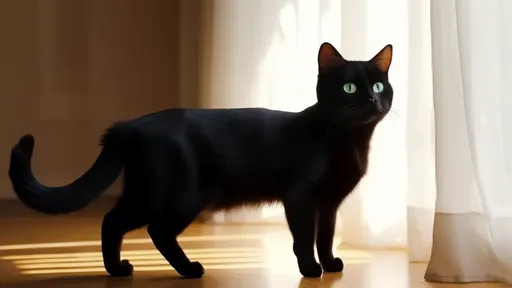
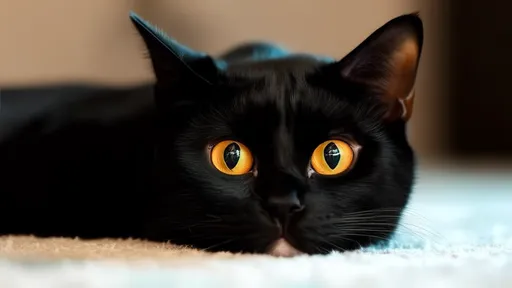
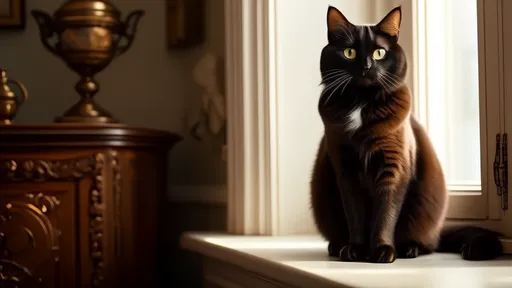
The Bombay cat, often dubbed the "miniature black panther," has long captivated feline enthusiasts with its sleek, jet-black coat and mesmerizing copper eyes. But beyond its striking appearance lies a creature of delightful contradictions—a domesticated wildling that balances the mystique of a jungle predator with the affectionate charm of a lap cat. This paradoxical allure has inspired a growing trend among beauty enthusiasts: the Bombay cat-inspired makeup look, where the feline's dramatic features are translated into bold, high-fashion statements.
At first glance, the Bombay's aesthetic seems tailor-made for editorial glamour. Its liquid-onyx fur absorbs light like velvet, creating a seamless silhouette that makeup artists replicate using matte black foundations and strategic contouring. The real showstopper, however, is those improbable eyes—burnished copper orbs that glow against the darkness like newly minted pennies. Cosmetic brands have taken note, with limited-edition "Bombay copper" pigment palettes flying off shelves. "It's not just about copying the colors," explains celebrity makeup artist Lila Vasquez, who recently created the look for a Vogue Mexico spread. "The magic happens when you capture that unblinking intensity, that quiet confidence. It's feline mystique in a powder compact."
Yet for all its high-fashion potential, the Bombay temperament couldn't be further from aloof model territory. Owners describe these cats as "velcro companions" who shadow their humans with dog-like devotion. This dichotomy—ferocious beauty paired with unabashed cuddliness—fuels their internet fame. Instagram accounts like @BombayBoop showcase the breed's comic antics: a statuesque panther-cat caught mid-yawn, or dramatically flopping over for belly rubs. "They're living proof that you can be both fierce and ridiculous," says owner Priya Chatterjee, whose viral TikTok videos feature her Bombay, Kali, stealing hair ties while maintaining regal eye contact.
The breed's origins add another layer to its intrigue. Developed in 1950s Kentucky by breeder Nikki Horner, the Bombay was conceived as "a good-natured black panther for the average household." Through careful crosses between sable Burmese and black American Shorthairs, Horner achieved the desired effect: the physique of a jungle cat with the temperament of a social butterfly. Modern breeders emphasize this duality, with websites advertising kittens as "equal parts panther and puddle of purrs." This intentional design makes the Bombay uniquely suited to its current role as muse—a living lesson in balancing opposing energies.
Animal behaviorists attribute the Bombay's appeal to what they call the "predator-pet paradox." Humans are hardwired to find predator aesthetics compelling (think sharp cheekbones, penetrating gaze), while simultaneously craving nurturing interactions. The Bombay delivers both. "It satisfies our ancient brain's admiration for dangerous beauty and our modern desire for connection," explains Dr. Ellen Reyes of the Feline Behavior Institute. This psychological sweet spot explains why Bombay-inspired makeup tutorials often outperform other animal-themed looks—they tap into something primal yet comforting.
Beyond cosmetics, the Bombay's influence ripples through fashion and decor. Designers reference its "black hole chic" in collections featuring liquid-like latex and metallic bronze accents. Home goods retailers report spikes in copper decor sales tagged #BombayStyle. Even beverage trends aren't immune—London mixologists recently debuted a "Bombay Black" cocktail with activated charcoal and edible copper flakes. "It's about embodying that luxurious darkness with a warm core," says trend analyst Marco Finnegan. "Like the cat itself, it's an experience that feels both dangerous and welcoming."
Not everyone embraces the Bombay craze without caveats. Some breed enthusiasts worry about impulse purchases when the cats trend on social media. "They're incredibly social and demand interaction," warns longtime breeder Samuel Okoye. "That gorgeous eyeliner effect around their eyes? It's nature's way of saying 'Look at me!'—and they mean it literally." Responsible Bombay ownership, he stresses, means appreciating the whole package: the midnight fur, the penny-bright eyes, and the chatty, clingy personality behind them.
Perhaps the deepest lesson of the Bombay's rise lies in its embrace of contrasts. In a world that often demands we choose between strength and softness, between mystery and accessibility, this little black cat with glowing eyes reminds us that the most compelling beings—and by extension, the most compelling beauty—exists in the hyphen between opposites. As Vasquez observes while blending copper pigment along a model's cheekbone: "The Bombay doesn't just wear a look. It lives a philosophy: be unapologetically bold, then roll over for scritches like it's no big deal. That's the energy we're trying to capture."
From runway looks to viral memes, the Bombay's influence shows no signs of fading. Upcoming collaborations include a Bombay-inspired jewelry line by designer Amina Diallo featuring black spinels with copper electroplating, and a limited-edition eyeshadow collection from Marc Jacobs Beauty dubbed "Panther's Pupil." Meanwhile, cat cafes from Toronto to Tokyo report waiting lists specifically for Bombay meet-and-greets. As the line between pet trends and pop culture continues to blur, one thing becomes clear: this miniature panther has pounced straight into our collective imagination—copper eyes blazing, purr motor running, forever suspended between wildness and warmth.
By /Jun 12, 2025
By /Jun 12, 2025
By /Jun 12, 2025
By /Jun 12, 2025

By /Jun 12, 2025
By /Jun 12, 2025
By /Jun 12, 2025
By /Jun 12, 2025
By /Jun 12, 2025
By /Jun 12, 2025
By /Jun 12, 2025
By /Jun 12, 2025
By /Jun 12, 2025
By /Jun 12, 2025
By /Jun 12, 2025
By /Jun 12, 2025
By /Jun 12, 2025
