The feline world is no stranger to controversy, especially when it comes to the intricate nuances of breed nomenclature. One such debate that has persisted for decades revolves around the distinction—or lack thereof—between the Colorpoint Persian and the Himalayan cat. To the untrained eye, these two breeds may appear nearly identical, but beneath the surface lies a tangled web of genetics, breed standards, and historical disagreements that have left cat enthusiasts divided.
The Origins of the Himalayan Cat
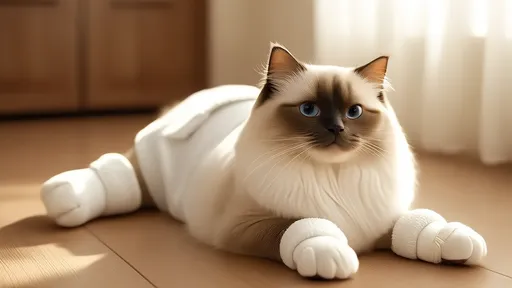
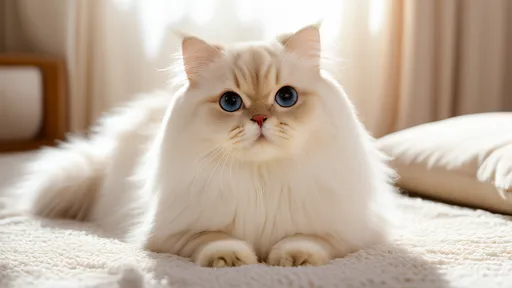
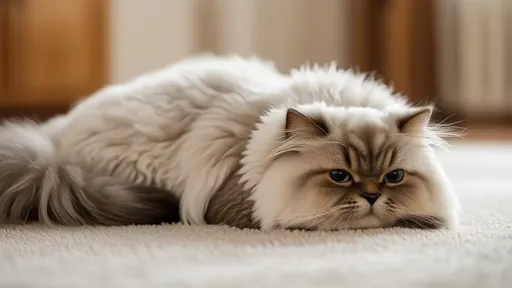
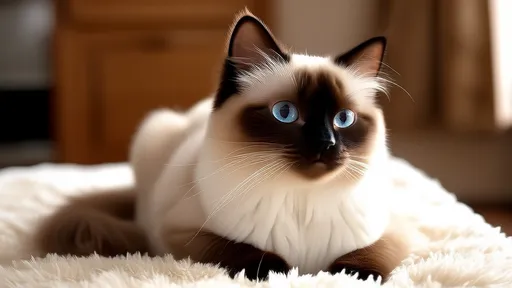
The Himalayan cat, often affectionately referred to as the "Himmie," traces its roots back to the mid-20th century when breeders sought to combine the luxurious coat of the Persian with the striking colorpoints of the Siamese. Through careful selective breeding, they achieved a cat with the Persian's signature long, flowing fur and the Siamese's distinctive dark extremities—ears, face, paws, and tail. The name "Himalayan" was inspired by the coloration of Himalayan rabbits, which exhibit similar dark points against a lighter body.
For many years, the Himalayan was recognized as a separate breed by major cat registries, including the Cat Fanciers' Association (CFA). However, this began to change in the latter half of the 20th century as some organizations questioned whether the Himalayan was truly distinct enough from the Persian to warrant its own classification. The debate intensified as genetic testing advanced, revealing that the colorpoint pattern could indeed be introduced into Persian lines without significant deviation from the breed's core characteristics.
The Persian Colorpoint Controversy
Enter the Colorpoint Persian—a cat that, genetically speaking, is nearly identical to the Himalayan but carries a different name depending on the registry. Some purists argue that the Himalayan should remain a separate breed due to its hybrid origins, while others contend that the differences are merely cosmetic and don't justify a separate classification. This has led to a peculiar situation where the same cat might be called a Himalayan by one registry and a Colorpoint Persian by another.
The CFA's decision in the 1980s to reclassify Himalayans as a subset of Persians (officially designating them as "Persian—Himalayan") further fueled the dispute. Proponents of this move argued that the Himalayan's body type, facial structure, and temperament were undeniably Persian, making the distinction arbitrary. Critics, however, viewed it as an erasure of the Himalayan's unique heritage and a capitulation to Persian traditionalists.
Breed Standards and the Eye of the Beholder
Complicating matters further is the variation in breed standards across different organizations. In Europe, for instance, many registries never recognized the Himalayan as a separate breed to begin with, instead considering colorpoint Persians a natural variation. Meanwhile, some breeders insist that Himalayans have subtle differences in bone structure and eye shape that set them apart, even if those distinctions aren't universally acknowledged.
The controversy extends to cat shows, where judging can become a minefield of terminology. A cat entered as a Himalayan in one show might compete as a Colorpoint Persian in another, potentially facing different standards and expectations. This inconsistency has led to frustration among breeders who feel that the lack of consensus undermines the integrity of competitive feline exhibitions.
The Genetic Argument
Modern DNA analysis has only added layers to the debate. While it's true that the colorpoint gene (responsible for the Himalayan's signature markings) originated from Siamese ancestry, generations of careful breeding have diluted other Siamese traits in Himalayans. Today's colorpoint Persians or Himalayans—depending on one's preferred terminology—are genetically much closer to other Persians than to Siamese cats.
Some geneticists argue that this makes the distinction meaningless from a scientific standpoint. If the only difference is a single gene affecting coat color distribution, they reason, then maintaining separate breed status is more about tradition than biology. Others counter that breed classification has always been as much about history and aesthetics as it is about genetics, and that the Himalayan's unique origins deserve recognition.
The Future of the Debate
As with many longstanding disputes in the cat fancy world, this one shows no signs of resolution. Younger breeders and cat enthusiasts often view the distinction as antiquated, while traditionalists remain steadfast in their positions. The rise of DNA testing and increasing globalization of cat breeding may eventually force a reckoning, but for now, the question of whether Colorpoint Persians and Himalayans are the same remains firmly in the eye of the beholder.
What's undeniable is that both by any name—are magnificent animals that combine the Persian's regal elegance with striking coloration. Perhaps in the end, the debate says more about human nature's need to categorize than it does about the cats themselves, who remain blissfully unaware of the controversy surrounding their pedigrees.
By /Jun 12, 2025
By /Jun 12, 2025
By /Jun 12, 2025
By /Jun 12, 2025

By /Jun 12, 2025
By /Jun 12, 2025
By /Jun 12, 2025
By /Jun 12, 2025
By /Jun 12, 2025
By /Jun 12, 2025
By /Jun 12, 2025
By /Jun 12, 2025

By /Jun 12, 2025

By /Jun 12, 2025
By /Jun 12, 2025

By /Jun 12, 2025
By /Jun 12, 2025
