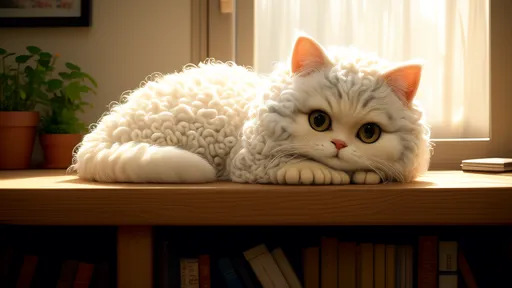
The LaPerm cat, with its distinctive curly coat resembling a delicate perm, stands as one of nature's most fascinating genetic marvels. Unlike other feline breeds that owe their unique appearances to selective breeding, the LaPerm’s signature "woolly curls" emerged spontaneously through a rare genetic mutation. This breed’s story is not just about aesthetics but a testament to the unpredictable wonders of genetics.
Discovered in the early 1980s on a cherry farm in Oregon, the first LaPerm kitten was born bald, much to the surprise of its owner, Linda Koehl. Weeks later, soft curls began to cover its body, setting the stage for what would become a globally recognized breed. The mutation responsible for the LaPerm’s coat is dominant, meaning even a single copy of the gene can produce the curly fur, making it a dominant trait in feline genetics. This spontaneous mutation has since been carefully preserved by breeders who fell in love with the breed’s whimsical appearance and affectionate personality.
The Science Behind the Curls
What makes the LaPerm’s coat so unique is the structure of its hair follicles. Unlike straight-haired cats, the follicles in a LaPerm are shaped differently, causing the hair to spiral as it grows. This mutation affects the keratin structure, the protein responsible for hair formation, resulting in a soft, springy texture that feels almost like mohair. Researchers have noted similarities between this mutation and certain curly-coated dog breeds, suggesting a fascinating parallel in how genetics can shape animal coats across species.
Interestingly, not all LaPerms are born with curls. Some kittens arrive with straight fur, only for their coats to change texture as they mature—a phenomenon that keeps breeders and owners on their toes. This variability adds to the breed’s mystique, as no two LaPerms develop their curls in exactly the same way. Some may have tight ringlets, while others sport loose waves, making each cat a one-of-a-kind masterpiece of genetics.
More Than Just a Pretty Coat
Beyond their striking appearance, LaPerms are beloved for their engaging personalities. Described as playful, intelligent, and deeply social, these cats form strong bonds with their human companions. Their inquisitive nature means they often follow their owners around, eager to participate in daily activities. Unlike some breeds that are aloof or independent, LaPerms thrive on interaction, making them ideal pets for families or individuals seeking a loyal feline friend.
Their curly coats, while eye-catching, also come with practical benefits. Despite their voluminous appearance, LaPerms are surprisingly low-maintenance when it comes to grooming. Unlike long-haired breeds prone to matting, their curls naturally resist tangles, requiring only occasional brushing to keep them looking their best. This combination of beauty and ease of care has contributed to the breed’s growing popularity among cat enthusiasts worldwide.
A Breed That Defies Convention
The LaPerm’s journey from a farm in Oregon to international recognition is a story of serendipity and passion. Unlike meticulously planned breeding programs, this breed’s origin was entirely accidental, proving that nature sometimes produces the most extraordinary results without human intervention. Today, LaPerms are celebrated in cat shows and cherished in homes, their curls serving as a reminder of the beautiful unpredictability of genetics.
As research continues into the genetic markers responsible for the LaPerm’s coat, scientists hope to uncover more about how such mutations occur and what they can teach us about heredity in animals. For now, the LaPerm remains a living testament to the magic of spontaneous genetic variation—a curly-coated wonder that continues to captivate hearts around the globe.
By /Jun 12, 2025
By /Jun 12, 2025
By /Jun 12, 2025
By /Jun 12, 2025

By /Jun 12, 2025
By /Jun 12, 2025
By /Jun 12, 2025
By /Jun 12, 2025
By /Jun 12, 2025
By /Jun 12, 2025
By /Jun 12, 2025
By /Jun 12, 2025
By /Jun 12, 2025
By /Jun 12, 2025
By /Jun 12, 2025
By /Jun 12, 2025
By /Jun 12, 2025
