Tonkinese Cats: The Warm-Toned Balance Act of Siamese and Burmese

Jun 12, 2025 By

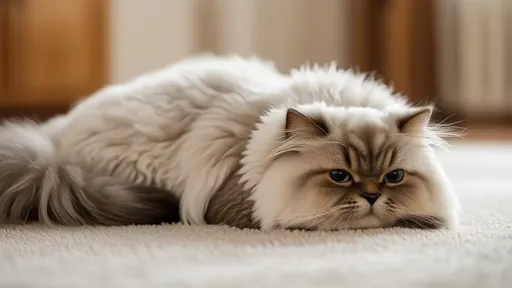
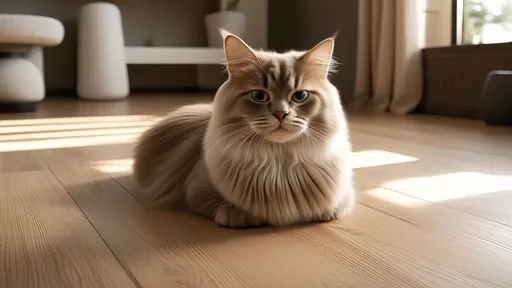
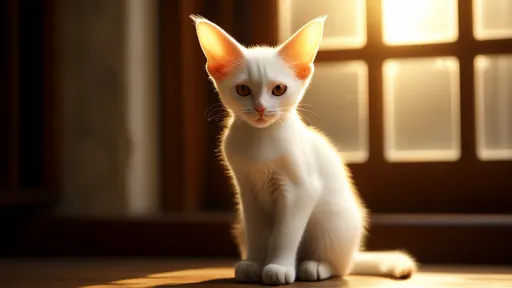
The Tonkinese cat represents a fascinating equilibrium in the feline world – a deliberate blend of two beloved breeds that creates something entirely new yet comfortingly familiar. This warm-toned intermediary between the angular sophistication of the Siamese and the rounded solidity of the Burmese carries forward the best qualities of both ancestors while developing its own distinct personality and physical charm.

Breeders in the mid-20th century noticed something magical happened when they crossed these two Southeast Asian breeds. The offspring displayed neither the extreme wedge-shaped head of the Siamese nor the completely rounded skull of the Burmese, but rather a modified wedge that struck observers as "just right." Their bodies followed suit – more substantial than the willowy Siamese yet more refined than the compact Burmese, achieving what fanciers call a "middleweight" balance.

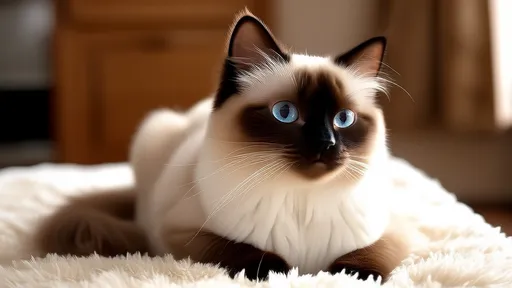
The color palette of the Tonkinese deserves particular attention. While the Siamese presents cool-toned points with stark contrast against a pale body, and the Burmese shows subtle shading in warmer hues, the Tonkinese offers something in between. Their points are distinctly visible but blend more gently into the body color, creating what's known as "mink" patterning. The warm caramel tones, champagne shades, and soft platinum colors glow with an inner luminosity that seems to radiate from within the fur itself.

Personality-wise, these cats perform their own balancing act. From their Siamese lineage comes an undeniable intelligence and curiosity – they will investigate every new object in their environment with systematic thoroughness. Yet the Burmese contribution softens the sometimes overwhelming vocal intensity of the Siamese into a more modulated conversational style. Tonkinese cats chat with their people using a range of murmurs, trills, and the occasional emphatic opinion, but rarely reach the piercing decibel level that characterizes their Siamese cousins.

What truly sets the Tonkinese apart is their social flexibility. While both parent breeds tend to form intense bonds with a particular person, the Tonkinese distributes its affection more democratically. They'll happily greet guests without suspicion, adapt well to multi-pet households, and demonstrate remarkable patience with children. This isn't to say they lack devotion – a Tonkinese will follow its chosen people from room to room – but they manage to do so without the sometimes claustrophobic single-mindedness that characterizes some oriental breeds.

The breed's moderate conformation brings practical advantages often overlooked in discussions about feline aesthetics. Their balanced proportions make them less prone to certain health issues that sometimes trouble their parent breeds. The slightly longer nose than the Burmese promotes better breathing, while the more substantial body structure compared to the Siamese provides greater resilience. It's as if nature itself approved of this carefully negotiated compromise between two extremes.

Grooming a Tonkinese becomes a pleasure rather than a chore due to their unique coat texture. The single-layer coat, inherited from both ancestors, lacks the dense undercoat that causes matting in many breeds. The fur feels astonishingly soft – often described as "mink-like" – and lies close to the body with a slight sheen that catches the light beautifully. Weekly brushing becomes less about hair control and more about bonding, as most Tonkinese relish the attention and will actively participate in the process.

Their play style reveals yet another dimension of this careful balancing act. Tonkinese retain the Siamese love of high places and acrobatic leaps, but with slightly more caution and less reckless abandon. They'll engage in marathon fetch sessions like the most dog-like of Siamese, but intersperse these energetic bursts with periods of contented lap-sitting that would do any Burmese proud. This self-regulating energy level makes them ideal companions for people who want an interactive cat without constant demands for attention.

The eyes of the Tonkinese might be their most striking feature – neither the deep gold of the Burmese nor the brilliant blue of the Siamese, but rather a mesmerizing aqua shade that seems to change with the light. In certain illuminations, the eyes appear more blue-green; in others, they take on a turquoise hue. This aquatic coloring perfectly complements their warm-toned coats, creating a harmonious whole that pleases the eye without overwhelming it.

Modern Tonkinese breeders face an interesting challenge – maintaining this delicate balance while expanding the gene pool. Careful outcrossing programs with both parent breeds ensure genetic diversity while preserving the distinctive middle ground that defines the Tonkinese. The best breeders approach this task with artistic sensitivity, knowing that tipping too far in either direction would lose the essential qualities that make the breed unique.

For prospective owners, the Tonkinese offers a masterclass in feline moderation. They provide the intelligence and interactivity of the oriental breeds without the potential intensity that some find overwhelming. Their affectionate nature comes with an independent streak that prevents clinginess, and their moderate activity level suits most households. In a world of extremes, the Tonkinese stands as a testament to the beauty of balance – a warm-toned ambassador between two feline traditions, creating something greater than the sum of its parts.
Recommend Posts
Pet

Snowshoe Cat: The Aesthetics of White Mittens and Boots in Ritual Sensibility

By /Jun 12, 2025

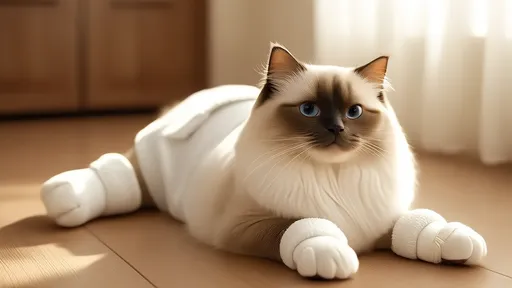
The Snowshoe cat, with its striking white gloves and boots, embodies a unique aesthetic that captivates feline enthusiasts and designers alike. This breed’s distinctive markings aren’t just a genetic quirk—they’re a visual symphony of contrast and elegance, evoking a sense of ceremonial grace. The juxtaposition of dark fur against pristine white paws creates a natural tuxedo effect, as if the cat is perpetually dressed for a gala. It’s no wonder this look has inspired everything from fashion runways to home decor trends, where the concept of "dressed paws" translates into human accessories and interior accents.
Pet

Oriental Shorthair: The Ultimate Slender Supermodel" of the Cat World

By /Jun 12, 2025

The Oriental Shorthair cat, often referred to as the "supermodel of the feline world," is a breed that effortlessly combines elegance, grace, and an almost otherworldly allure. With their sleek, elongated bodies, large ears, and almond-shaped eyes, these cats exude a sense of sophistication that is hard to ignore. They are the epitome of feline refinement, a living testament to the artistry of selective breeding and the natural beauty of cats.
Pet

Ocelot Cat: The Fusion Experiment of Wild Spots and Domestic Cat Souls

By /Jun 12, 2025

The Ocicat, with its striking wild-spotted coat and domestic feline demeanor, represents one of the most fascinating experiments in selective breeding. This breed embodies a paradoxical fusion—a meticulously engineered wild aesthetic paired with the affectionate temperament of a house cat. Behind those leopard-like spots lies not a drop of actual wild blood, yet the illusion is so convincing that it challenges our perception of domestication. The Ocicat’s existence forces us to confront a compelling question: Can the essence of the wild be distilled into a companion animal without sacrificing the comforts of tameness?
Pet

Bombay Cat: The Panther Makeup Master and the Contrasting Cuteness of Copper Eyes

By /Jun 12, 2025

The Bombay cat, often dubbed the "miniature black panther," has long captivated feline enthusiasts with its sleek, jet-black coat and mesmerizing copper eyes. But beyond its striking appearance lies a creature of delightful contradictions—a domesticated wildling that balances the mystique of a jungle predator with the affectionate charm of a lap cat. This paradoxical allure has inspired a growing trend among beauty enthusiasts: the Bombay cat-inspired makeup look, where the feline's dramatic features are translated into bold, high-fashion statements.
Pet

The Price of Pure White Cats: The Mystery of Deafness Probability in Blue-Eyed White Cats

By /Jun 12, 2025

The enigmatic connection between blue-eyed white cats and congenital deafness has puzzled feline geneticists and veterinarians for over a century. These strikingly beautiful animals, often referred to as "pure white with azure eyes," carry a genetic legacy that intertwines their mesmerizing appearance with an increased likelihood of hearing impairment. The phenomenon isn't merely a veterinary curiosity—it represents one of nature's most poignant examples of how aesthetic traits can come with biological trade-offs.
Pet

Tortoiseshell and Calico Cats: The 99% Female Genetic Code"

By /Jun 12, 2025

The world of feline genetics holds many colorful secrets, and few are as visually striking – or as genetically telling – as the vibrant coats of tortoiseshell and calico cats. These patchwork felines, affectionately known as "torties" and "calicos," carry more than just beautiful fur patterns; they embody one of nature's most fascinating chromosomal quirks. Behind their kaleidoscopic coats lies a biological truth that makes 99% of these cats female, a statistic that turns every male tortoiseshell or calico into a genetic unicorn.
Pet

The Magic of Focus Color Genes: Why Do So Many Cats Have Black Faces"?

By /Jun 12, 2025

The world of feline genetics is a realm of endless fascination, where tiny molecular twists paint the canvas of a cat’s appearance in ways that often seem almost magical. Among the most striking patterns is the "black-faced" phenotype seen in breeds like the Siamese, Burmese, and Himalayan—a look that captivates with its dramatic contrast. But what lies behind this striking coloration? The answer is a dance of temperature-sensitive genes, evolutionary quirks, and a biological process that feels almost alchemical.
Pet

Persian Cats ≠ Himalayan Cats: The Debate Over Bloodline Naming"

By /Jun 12, 2025

The feline world is no stranger to controversy, especially when it comes to the intricate nuances of breed nomenclature. One such debate that has persisted for decades revolves around the distinction—or lack thereof—between the Colorpoint Persian and the Himalayan cat. To the untrained eye, these two breeds may appear nearly identical, but beneath the surface lies a tangled web of genetics, breed standards, and historical disagreements that have left cat enthusiasts divided.
Pet

Chartreux Cats: The Blue Cats of France and the Secret History of Monasteries

By /Jun 12, 2025

The Chartreux cat, with its striking blue-gray coat and enigmatic golden eyes, has long been shrouded in mystery. Often referred to as the "French Blue," this feline breed carries a legacy intertwined with medieval monasteries, whispered legends, and a quiet resilience that has endured centuries. Unlike many domesticated cats with well-documented lineages, the Chartreux’s origins are veiled in the kind of ambiguity that invites both scholarly debate and romantic speculation.
Pet

Peter the Hairless Cat: The Wrinkled Thinker" of the Hairless World

By /Jun 12, 2025

The Peterbald cat, often referred to as the "thinker" of the hairless feline world, is a breed that captivates with its unique appearance and enigmatic personality. With its wrinkled skin, slender frame, and expressive eyes, this breed stands out even among other hairless cats like the Sphynx. But there’s more to the Peterbald than just its striking looks—its intelligence, social nature, and playful demeanor make it a fascinating companion for those who appreciate its distinctive charm.
Pet

Selkirk Rex: The Teddy Bear-like Fluffy and Leisurely Feel

By /Jun 12, 2025

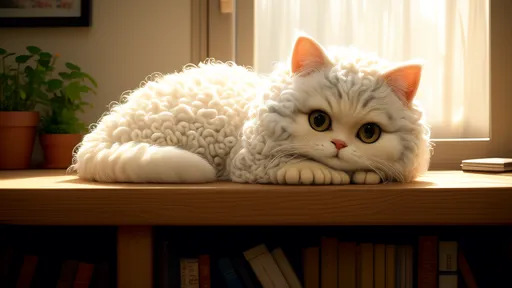
The Selkirk Rex cat, with its distinctive curly coat and teddy bear-like appearance, has captured the hearts of feline enthusiasts worldwide. Unlike other curly-coated breeds, the Selkirk Rex boasts a plush, dense, and undeniably huggable texture that invites endless cuddles. This breed’s relaxed demeanor and affectionate nature make it a perfect companion for those seeking a low-maintenance yet utterly charming pet.
Pet

Tonkinese Cats: The Warm-Toned Balance Act of Siamese and Burmese

By /Jun 12, 2025

The Tonkinese cat represents a fascinating equilibrium in the feline world – a deliberate blend of two beloved breeds that creates something entirely new yet comfortingly familiar. This warm-toned intermediary between the angular sophistication of the Siamese and the rounded solidity of the Burmese carries forward the best qualities of both ancestors while developing its own distinct personality and physical charm.
Pet

Burmilla Cats: The Rosewood Hybrid" of Chinchilla and Burmese

By /Jun 12, 2025

The Burmilla cat is a striking breed that effortlessly blends the elegance of the Chinchilla Persian with the playful charm of the Burmese. Often referred to as the "rosewood hybrid," this feline marvel has captured the hearts of cat enthusiasts worldwide. With its shimmering silver coat and expressive green eyes, the Burmilla is more than just a pretty face—it’s a testament to the beauty of careful breeding and serendipity.
Pet

European Burmese Cats: Distinct from American System's Warm Gemstone

By /Jun 12, 2025

The European Burmese cat, a breed often overshadowed by its American cousin, stands as a unique gem in the feline world. While the American Burmese is celebrated for its rounded, doll-like features and compact body, the European variant exudes a more refined elegance, with a slender build and a distinctly expressive face. This divergence in type isn’t merely cosmetic—it reflects decades of selective breeding and cultural preferences that have shaped these cats into two distinct interpretations of the same ancestral lineage.
Pet

American Curl: Folded Ears and Sweet Personality

By /Jun 12, 2025

The American Curl is a breed that stands out immediately, not just for its distinctive curled ears but for its disarmingly sweet temperament. Unlike many feline breeds that rely solely on physical traits to capture attention, the American Curl wins hearts with a combination of unique aesthetics and an affectionate personality. The ears, curling backward in a graceful arc, are more than a quirky feature—they’re a signature of the breed’s genetic charm. But what truly endears these cats to their owners is their playful yet gentle nature, making them ideal companions for families, singles, and even other pets.
Pet

The Ragdoll Cat: A Miracle of the Woolly Curls Mutated Gene

By /Jun 12, 2025

The LaPerm cat, with its distinctive curly coat resembling a delicate perm, stands as one of nature's most fascinating genetic marvels. Unlike other feline breeds that owe their unique appearances to selective breeding, the LaPerm’s signature "woolly curls" emerged spontaneously through a rare genetic mutation. This breed’s story is not just about aesthetics but a testament to the unpredictable wonders of genetics.
Pet

The Singapore Cat: The Prison Origins of the World's Smallest Domestic Cat

By /Jun 12, 2025

The Singapore cat, often celebrated as the world's smallest domestic feline, carries a peculiar and little-known origin story—one that begins not in luxurious homes or bustling streets, but within the confines of Singapore's prisons. This diminutive breed, with its large eyes and sleek coat, has captivated cat enthusiasts worldwide, yet its journey from prison yards to international acclaim remains a tale shrouded in colonial history and bureaucratic intrigue.