The European Burmese cat, a breed often overshadowed by its American cousin, stands as a unique gem in the feline world. While the American Burmese is celebrated for its rounded, doll-like features and compact body, the European variant exudes a more refined elegance, with a slender build and a distinctly expressive face. This divergence in type isn’t merely cosmetic—it reflects decades of selective breeding and cultural preferences that have shaped these cats into two distinct interpretations of the same ancestral lineage.
Originating from the same foundation—a small, dark brown cat named Wong Mau brought from Burma to the United States in the 1930s—the European and American Burmese gradually evolved along separate paths. American breeders favored a cobbier, more muscular physique, while their European counterparts leaned toward a sleeker, more angular silhouette. The European Burmese, often described as "oriental but not extreme," strikes a delicate balance between the robustness of the British Shorthair and the elongation of the Siamese. This middle ground gives the breed an air of sophistication, as if carved from warm, polished stone rather than molded from plush fabric.
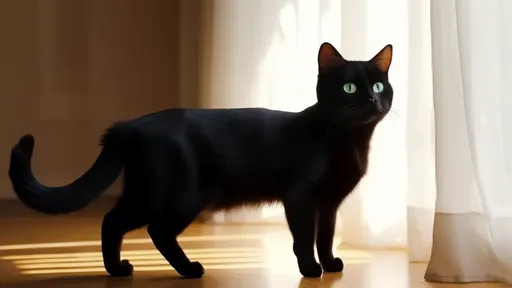
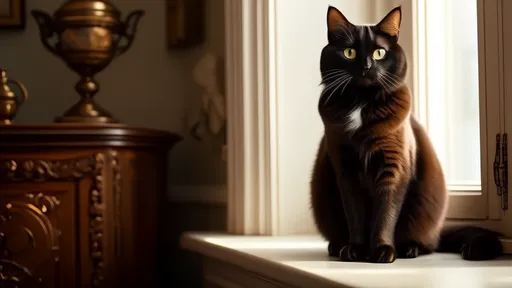
The coat of the European Burmese is another point of distinction. While both lineages share the same signature satin-like texture, the European palette tends to be more expansive. Beyond the classic sable, champagne, blue, and platinum, European breeders have embraced subtler shades like lilac and red, as well as tortoiseshell patterns. The coloration is often more graduated, with a gentle shimmer that catches the light differently than the American Burmese’s more uniform glow. It’s a difference akin to brushed metal versus high-gloss enamel—both beautiful, but one whispers where the other announces.
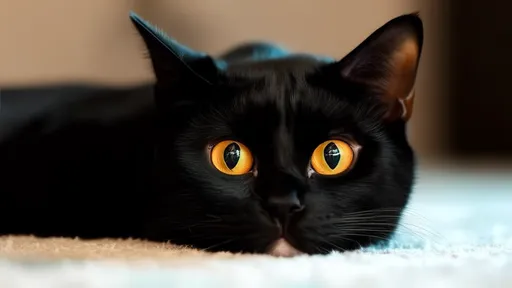
Perhaps the most striking contrast lies in the head shape. The European Burmese sports a modified wedge, with high cheekbones and a slightly longer nose, giving it an alert, intelligent expression. The eyes, large and luminous, are set at a perceptible slant, radiating a quiet intensity. This is a cat that seems to regard the world with thoughtful curiosity, whereas the American Burmese’s rounder eyes and shorter muzzle lend it a perpetually sweet, almost innocent demeanor. Neither is superior—they simply appeal to different aesthetics, like comparing a Renaissance portrait to a Pre-Raphaelite painting.
Temperamentally, the European Burmese shares the breed’s trademark affection and sociability, but with a marginally reserved edge. They form deep bonds with their humans but often exhibit a more measured approach to interaction, choosing when to engage rather than constantly demanding attention. Their voices, too, tend to be softer—a melodic chirp rather than the insistent trill of their American relatives. This isn’t aloofness; it’s a quiet confidence, the self-assurance of a cat that knows its worth and doesn’t need to shout about it.
In the show ring, the European Burmese has struggled for recognition outside its native continent, particularly in regions where the American standard dominates. Yet those who discover it frequently become devoted advocates, captivated by its understated grace. This is a cat that doesn’t clamor for admiration but earns it through subtlety—the way sunlight highlights the contours of its musculature, or how it drapes itself across a chair like liquid bronze. It’s a living lesson in refinement, proving that sometimes the most enduring beauty lies not in boldness, but in nuance.
For prospective owners torn between the two types, the decision ultimately hinges on personal preference. The American Burmese envelops you in immediate, effusive warmth, like a favorite sweater. The European Burmese offers something different—a slow-burning radiance, the kind that reveals itself in layers. It’s the difference between a hug and a knowing smile; both convey love, but in distinct dialects. And in that distinction lies the true value of the European Burmese: not as a rival to its transatlantic sibling, but as a complementary counterpoint, enriching the tapestry of the breed as a whole.
As the feline fancy continues to evolve, there’s hope that the European Burmese will find its footing on the global stage. Already, discerning breeders in North America and Asia are beginning to incorporate European lines, drawn to their genetic diversity and elegant proportions. This quiet resurgence speaks to an enduring truth: gems need no polish to shine. The European Burmese, with its muted luster and quiet dignity, has been glowing all along—waiting for the world to take notice.
By /Jun 12, 2025
By /Jun 12, 2025
By /Jun 12, 2025
By /Jun 12, 2025

By /Jun 12, 2025
By /Jun 12, 2025
By /Jun 12, 2025
By /Jun 12, 2025
By /Jun 12, 2025
By /Jun 12, 2025
By /Jun 12, 2025
By /Jun 12, 2025
By /Jun 12, 2025
By /Jun 12, 2025
By /Jun 12, 2025
By /Jun 12, 2025
By /Jun 12, 2025
