Almond Wafer Delicacy: Batter Spreading Thickness and Baking Tray Parchment Paper Treatment

Jun 18, 2025 By

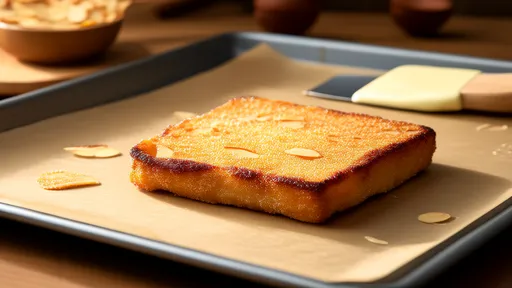
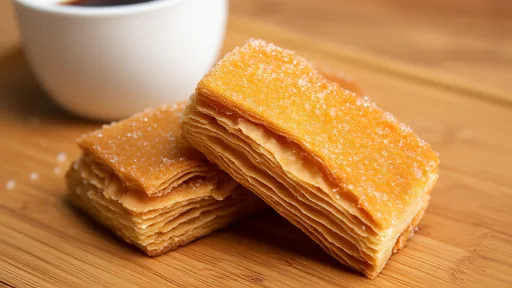
The art of crafting perfectly crisp almond tuile cookies lies in mastering two critical elements: achieving the ideal batter thickness and properly preparing the baking surface. These delicate, lace-like confections demand precision at every stage, from mixing to baking, with their characteristic thinness and crunch being the hallmarks of success. Professional bakers and home enthusiasts alike often struggle with consistency in these areas, but understanding the science behind the process can elevate one's technique dramatically.

Batter thickness is arguably the most crucial factor in determining the final texture of almond tuiles. When the mixture is spread too thick, the cookies lose their signature delicacy, becoming unpleasantly hard rather than elegantly crisp. Conversely, insufficient batter results in fragile, uneven wafers that crumble at the slightest touch. The sweet spot typically falls between 1/16 to 1/8 inch (1.5-3mm), creating that perfect balance between structural integrity and ethereal lightness.

The viscosity of the batter plays an equally important role as the spreading technique. A mixture that's too thin will run uncontrollably on the baking sheet, while an overly thick batter resists proper flattening. Many experienced bakers recommend adjusting the batter's consistency with small additions of liquid or dry ingredients until it flows slowly off the spoon, similar to warm honey. This ensures easy spreading while maintaining enough body to hold its shape during baking.

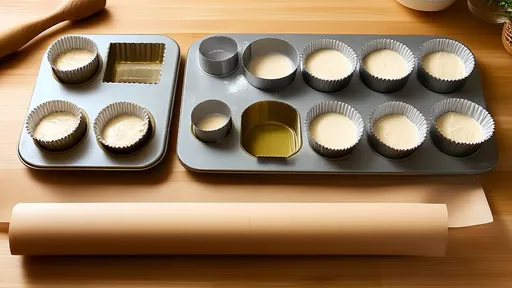
Parchment paper treatment significantly impacts how the batter behaves during spreading and baking. Untreated parchment often causes the batter to stick in certain spots while sliding freely in others, leading to inconsistent thickness. A light brushing with neutral oil or melted butter creates the ideal surface tension - enough to slightly slow the batter's spread without causing adhesion problems. Some bakers swear by silicone baking mats, which provide consistent results batch after batch without requiring additional grease.

Temperature management throughout the process cannot be overlooked. The batter spreads most evenly when at room temperature, as chilled mixtures tend to contract on warm baking sheets. Conversely, baking sheets that are too hot when the batter is applied can cause premature setting, resulting in uneven thickness. Many professionals recommend letting the prepared baking sheets cool slightly after removing them from the oven if making multiple batches in succession.

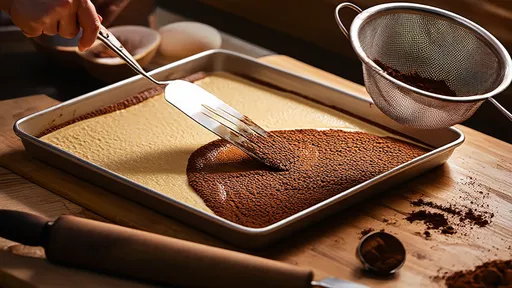
The spreading technique itself requires practice to perfect. While some bakers prefer using an offset spatula for precision, others achieve excellent results with the back of a spoon or even specialized tuile spreaders. The key lies in using smooth, continuous motions to create an even layer without overworking the batter. Circular motions often work better than back-and-forth strokes, as they help distribute the batter more uniformly while minimizing the risk of creating thin spots.

Oven dynamics play their part in the thickness equation as well. Conventional ovens with hot spots may require rotating the baking sheets midway through cooking to ensure even spreading and browning. Convection ovens, with their circulating air, often produce more consistent results but may require temperature adjustments to prevent the ultra-thin edges from over-browning before the centers properly crisp.

When examining professional kitchens, one notices that most pastry chefs bake tuiles at relatively low temperatures (typically 300-325°F/150-165°C) for longer periods rather than using high heat. This slow approach allows for gradual moisture evaporation without causing the sugars to caramelize too quickly, which can lead to uneven texture and coloring. The extended baking time also helps set the structure before the cookies become too dark.

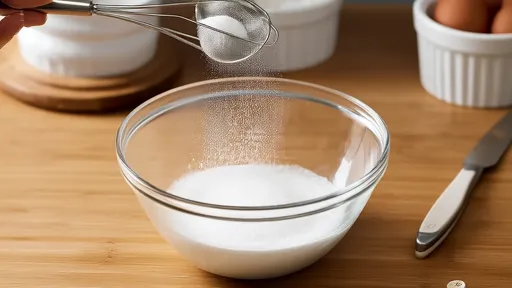
The type of sweetener used in the batter affects both spreadability and final crispness. Granulated sugar tends to produce crisper results but can make the batter more difficult to spread evenly. Powdered sugar, while easier to incorporate, sometimes leads to slightly softer textures. Many recipes strike a balance between the two, or incorporate a small amount of liquid sweetener like honey or glucose syrup to improve spreadability without sacrificing crunch.

Resting the batter before baking emerges as another technique worth considering. Allowing the mixed batter to sit for 15-30 minutes gives the flour time to fully hydrate and the starches to begin swelling, which often results in more consistent spreading behavior. This resting period also allows any air bubbles incorporated during mixing to dissipate, preventing uneven spots in the baked tuiles.

For those seeking picture-perfect uniformity, specialized tools like adjustable-height spreader frames or stencils can help achieve precise thickness across every cookie. While these tools require additional setup time, they eliminate much of the guesswork involved in freehand spreading. Commercial bakeries often employ such devices to maintain consistency across large production runs.

The relationship between thickness and baking time follows an inverse proportion - thinner spreads require less time in the oven, while slightly thicker applications need extended baking to achieve full crispness. Learning to judge doneness by color and aroma rather than strict timing proves invaluable, as oven variations and humidity levels can significantly affect actual baking requirements.

Storage considerations complete the thickness discussion. Perfectly baked tuiles maintain their crispness best when stored in airtight containers with silica gel packets to absorb ambient moisture. Interestingly, slightly thicker tuiles often have better shelf life than their ultra-thin counterparts, as the additional structure resists humidity-induced softening for longer periods. However, purists argue that the textural superiority of properly thin tuiles outweighs any storage advantages of thicker versions.

Mastering almond tuiles ultimately comes down to understanding how these various factors interact. The delicate balance between batter viscosity, spreading technique, and baking parameters separates adequate results from exceptional ones. With practice and attention to these details, bakers can consistently produce these elegant cookies with their signature glass-like crispness and golden hue.
Recommend Posts
Food

Gluten-Free Almond Flour Cake: Starch Substitution Ratio and Moisture Maintenance

By /Jun 18, 2025

For those navigating the world of gluten-free baking, almond flour has emerged as a popular foundation for cakes and other treats. Its natural sweetness, nutty flavor, and high protein content make it an appealing alternative to traditional wheat flour. However, anyone who has experimented with almond flour knows that achieving the perfect texture—especially maintaining moisture—can be a delicate balancing act. Unlike wheat flour, almond flour lacks gluten, which plays a crucial role in structure and elasticity. This absence often leads to baked goods that are dense or crumbly if not properly addressed.
Food

30-Minute Quick Scones: Baking Powder Dosage and Butter Incorporation Techniques

By /Jun 18, 2025

The humble scone occupies a curious space in the baking pantheon - neither bread nor cake, yet capable of achieving heights of flakiness or disastrous density based on a few critical variables. Among home bakers, the 30-minute quick scone has gained particular popularity for its promise of instant gratification without the yeast-proofing wait. But this accelerated timeline demands surgical precision with two key elements: baking powder proportions and butter incorporation technique.
Food

Air Fryer Muffin Cake: Temperature and Time Adjustments and Techniques to Prevent Cracking

By /Jun 18, 2025

Air fryers have revolutionized home baking, offering a quicker and often healthier alternative to traditional ovens. Among the many treats you can whip up in these compact appliances, muffins stand out as a favorite. However, achieving that perfect, bakery-style muffin in an air fryer requires some finesse, particularly when it comes to temperature control and preventing unsightly cracks. Let’s dive into the nuances of air fryer muffin baking, exploring how to adjust time and heat for flawless results every time.
Food

Adjusting Royal Icing Consistency: Techniques for Gradual Addition of Powdered Sugar and Liquid Drops

By /Jun 18, 2025

Mastering the consistency of royal icing is both an art and a science that separates casual bakers from true decorating professionals. The delicate balance between powdered sugar and liquid ingredients determines whether your icing will hold intricate piping designs or simply dissolve into a runny mess. While the basic ingredients remain constant – confectioners' sugar, egg whites or meringue powder, and water or lemon juice – the magic happens in how you combine them.
Food

Standard Procedure for Anti-stick Treatment of Baking Molds: Oil Coating and Flour Dusting, and Oil Paper Cutting

By /Jun 18, 2025

In the world of baking, few things are more frustrating than carefully preparing a cake or loaf only to have it stubbornly cling to the pan upon removal. Professional bakers understand that proper pan preparation isn't just a suggestion - it's the foundation upon which successful baked goods are built. The age-old techniques of greasing-and-flouring versus parchment paper lining each have their devoted followers, and mastering both methods separates adequate bakers from exceptional ones.
Food

Protein Whipping State Judgment: Visual Comparison from Wet Foam to Dry Foam

By /Jun 18, 2025

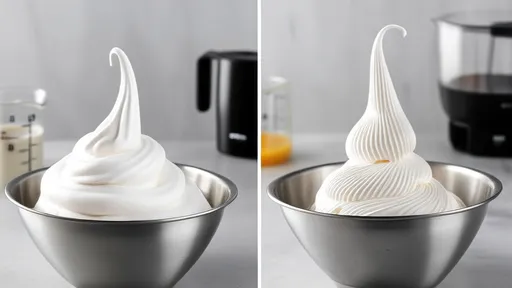
The transformation of egg whites from a viscous liquid to a voluminous foam is one of the most fascinating chemical processes in baking. At its core, this alchemy relies on the denaturation and reorganization of ovalbumin proteins when subjected to mechanical force. For pastry chefs and home bakers alike, recognizing the precise moment when whipped egg whites transition from wet peaks to dry peaks often marks the difference between a collapsed soufflé and one that soars.
Food

Japanese Wagashi Shaping: Control of Rice Flour Frying and Molding Pressure

By /Jun 18, 2025

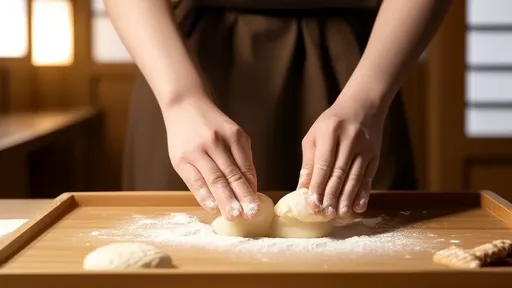
The delicate art of crafting Japanese rakugan confections represents a fascinating intersection of culinary precision and cultural tradition. These exquisite dry sweets, born in the Edo period as durable travel companions for samurai, demand extraordinary attention to detail – particularly during the two critical stages of roasted rice flour preparation and mold pressing. Mastering these techniques separates competent artisans from true masters of wagashi craftsmanship.
Food

Swedish Cinnamon Bun Spiral Shaping: Butter Sugar Filling Application and Tightness in Rolling

By /Jun 18, 2025

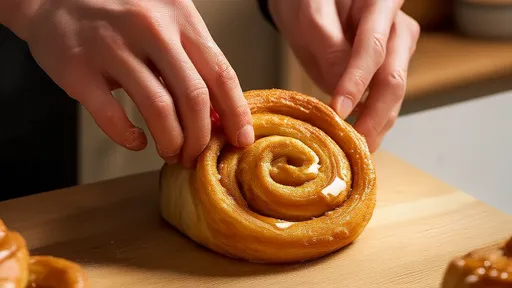
The art of crafting the perfect Swedish cinnamon bun lies in the delicate balance between buttery sweetness and structural integrity. While most bakers focus on the dough's consistency or the cinnamon's quality, the true secret resides in two often-overlooked factors: the distribution of the butter-sugar filling and the tension applied during rolling. These elements transform humble spirals of dough into those iconic, caramelized masterpieces that crackle when torn apart.
Food

German Stollen Bread Seasoning: Cinnamon Powder Dosage and Treatment of Soaked Dried Fruits

By /Jun 18, 2025

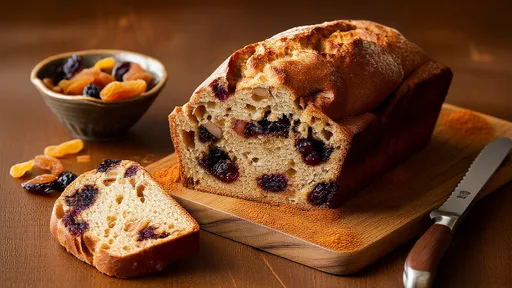
The rich, buttery indulgence of German Stollen bread has captivated bakers and dessert enthusiasts for centuries. This festive loaf, dense with marzipan and studded with jewel-like fruits, carries a distinct spiced warmth that lingers on the palate. At the heart of its flavor profile lies a delicate interplay between cinnamon’s earthy sweetness and the boozy complexity of rum-soaked dried fruits. Mastering these elements separates a good Stollen from an extraordinary one.
Food

Control of Wafer Thinness: Techniques for Sieving Batter and Using a Spatula to Level the Surface

By /Jun 18, 2025

In the world of artisanal chocolate work, achieving the perfect cocoa crisp thickness is both a science and an art. The delicate balance between structural integrity and melt-in-your-mouth quality hinges on two fundamental techniques: batter sieving and spreader-leveling methods. These processes, often overlooked by home cooks, separate professional-grade results from amateur attempts.
Food

How to Make Chinese Walnut Cookies Without Breaking: Balancing Lard Amount and Baking Time"

By /Jun 18, 2025

The art of crafting the perfect Chinese-style walnut cookie – crisp yet tender, crumbly yet intact – lies in mastering two critical variables: the precise ratio of lard and the exact baking time. This delicate equilibrium transforms what could be a fragile disaster into the iconic melt-in-your-mouth texture that has defined this imperial pastry since the Ming Dynasty.
Food

Moisture Control in American Soft Cookies: Brown Sugar Ratio and Chilled Dough Texture

By /Jun 18, 2025

The pursuit of the perfect American-style soft-baked cookie—one with crisp edges giving way to a tender, almost molten center—has long been a holy grail for both home bakers and pastry chefs alike. At the heart of this textural alchemy lies two critical factors: the careful manipulation of brown sugar ratios and the often-overlooked magic of dough refrigeration. These elements, when mastered, transform humble cookie dough into something extraordinary, where each bite delivers a symphony of contrasts.
Food

Almond Wafer Delicacy: Batter Spreading Thickness and Baking Tray Parchment Paper Treatment

By /Jun 18, 2025

The art of crafting perfectly crisp almond tuile cookies lies in mastering two critical elements: achieving the ideal batter thickness and properly preparing the baking surface. These delicate, lace-like confections demand precision at every stage, from mixing to baking, with their characteristic thinness and crunch being the hallmarks of success. Professional bakers and home enthusiasts alike often struggle with consistency in these areas, but understanding the science behind the process can elevate one's technique dramatically.
Food

Butterfly Puff's Thousand Layers: Key to Layering in Sugar Granules and Number of Times of Dough Laminating

By /Jun 18, 2025

The delicate art of crafting perfect palmiers, those crisp, caramelized butterfly-shaped pastries, hinges on two seemingly simple yet profoundly technical elements: the precise layering of dough through meticulous lamination and the strategic distribution of sugar crystals. While home bakers often focus on visible aspects like shape or baking time, professionals know that the true magic lies in understanding how these two factors interact to create that iconic flaky texture with glass-like sugar shards.
Food

Adjusting Pan Temperature and Batter Consistency for Durian Crepe Cake

By /Jun 18, 2025

The art of crafting the perfect durian mille crepe cake lies in mastering two fundamental elements: the precise temperature control of your skillet and the delicate balance of your batter's consistency. While many home bakers focus solely on the filling, seasoned pastry chefs know that the foundation of this Southeast Asian delicacy rests upon these often-overlooked technical details.
Food

Macaron Ruffle Cultivation: Precise Control of Protein Powder Dosage and Skin Drying Time

By /Jun 18, 2025

The delicate art of macaron-making hinges on two critical variables that separate bakery-quality results from amateur attempts: protein content in almond flour and precise resting periods. While most recipes focus on mixing techniques and oven temperatures, seasoned patissiers know the true magic happens during those seemingly passive stages of ingredient selection and patient drying.
Food

Basque Burnt Cheesecake: The Formation of Scorch Marks through 220°C High-Temperature Baking

By /Jun 18, 2025

The Basque burnt cheesecake, with its signature charred top and creamy interior, has taken the culinary world by storm. Unlike traditional cheesecakes that strive for a flawless appearance, this rustic dessert embraces imperfection, turning what might be considered a baking mishap into a celebrated feature. The secret lies in the high-temperature baking method, which caramelizes the surface while keeping the center luxuriously soft. This technique, originating from the Basque region of Spain, has inspired bakers worldwide to experiment with controlled burning to achieve that perfect balance of bitterness and sweetness.