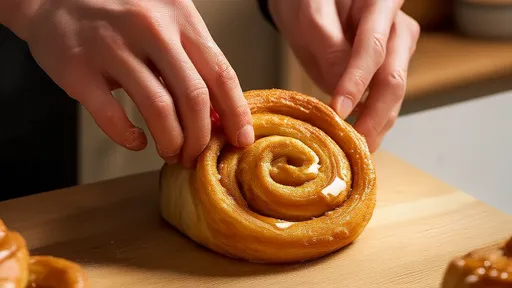
The art of crafting the perfect Swedish cinnamon bun lies in the delicate balance between buttery sweetness and structural integrity. While most bakers focus on the dough's consistency or the cinnamon's quality, the true secret resides in two often-overlooked factors: the distribution of the butter-sugar filling and the tension applied during rolling. These elements transform humble spirals of dough into those iconic, caramelized masterpieces that crackle when torn apart.
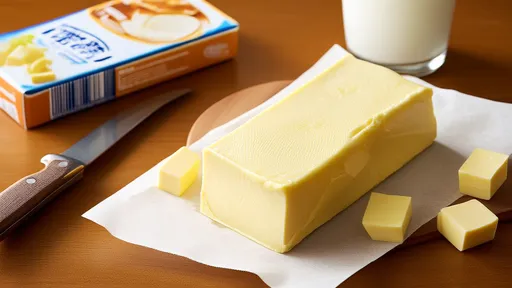
Traditional Swedish kanelbullar demand a specific approach to filling application. Unlike American cinnamon rolls that often use thick layers of frosting, their Nordic counterparts rely on a carefully calculated butter-sugar paste. This mixture must achieve a viscosity that allows it to spread thinly yet remain substantial enough to create those signature caramel pockets during baking. Professional bakers in Stockholm's oldest bakeries employ a technique where room-temperature butter gets whipped with granulated and brown sugar until it reaches a spreadable consistency similar to wet sand. The magic happens when this blend melts during baking, seeping into the dough's layers without making them soggy.
The application method proves equally crucial. Rather than smearing the filling haphazardly across rolled-out dough, seasoned bakers use the back of a spoon to create varying thickness zones. A heavier concentration along the center third of the rectangle ensures each bite contains that essential burst of sweetness, while thinner edges prevent leakage during rolling. This gradient approach mirrors the Swedish philosophy of lagom - not too much, not too little. Some artisanal bakeries even refrigerate the spread dough for fifteen minutes before rolling, allowing the butter to firm up slightly for cleaner layers.
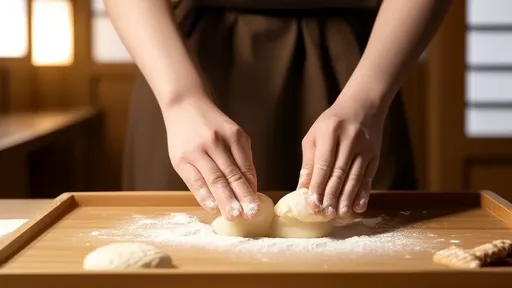
Rolling technique separates adequate cinnamon buns from extraordinary ones. The initial fold-over of dough onto filling requires precision - too loose and the spiral won't hold its shape; too tight and the filling squeezes out during proofing. Skilled bakers develop a tactile sense for the perfect tension, pulling gently outward while rolling inward to create even layers. The final log should feel springy yet firm when tapped, resembling a plump sausage. This tension gets maintained during the cutting phase as well, where dental floss or taut thread slices through the log without compressing the delicate layers.
Swedish home bakers have passed down generations of wisdom regarding rolling temperatures. Many insist the dough should be slightly cooler than room temperature for optimal handling, while the filling benefits from being marginally warmer to enhance spreadability. This temperature differential, when executed correctly, creates micro pockets where the butter can steam during baking, yielding that sought-after flakiness amidst the pillowy dough. Professional kitchens often proof their shaped buns at a slightly lower temperature than other enriched doughs to prevent premature butter leakage.
The proofing stage reveals whether the filling distribution and rolling tension were properly executed. Well-made kanelbullar will expand uniformly without oozing filling, each layer rising in harmony with its neighbors. Overproofing becomes particularly disastrous with cinnamon buns, as the sugar liquefies and breaks down the dough's structure. Swedish bakeries often employ the "finger test" - a light press should leave a slow-to-rebound indentation when the buns are perfectly proofed. This moment demands immediate baking to capture the structural integrity painstakingly built during the rolling process.
Baking transforms these prepared spirals into their final glorious form. The oven's heat causes the carefully layered butter to steam, separating the dough into distinct strata while the sugar caramelizes. Proper tension ensures the buns maintain their height rather than spreading outward, creating that desirable pull-apart texture. Many professional recipes call for starting at a higher temperature (220°C/425°F) for the first five minutes to set the structure, then reducing to 180°C/350°F to evenly bake through without over-browning. The signature shine comes from an egg wash applied just before baking, which interacts with the surface sugar to create that characteristic glossy finish.
Modern variations on the traditional Swedish cinnamon bun often stumble by neglecting these fundamental techniques. Whether adding cardamom to the dough or experimenting with fillings like vanilla custard or apple compote, successful innovations always respect the original principles of even filling distribution and controlled rolling tension. Some contemporary bakeries have begun using temperature-controlled sheeters to achieve perfect dough thickness, while others swear by aged butter for more complex flavor development in the filling. Yet regardless of technological advancements or creative twists, the soul of a proper kanelbulle remains rooted in these two critical preparation steps.
Understanding these nuances explains why Swedish cinnamon buns maintain global appeal despite their simple ingredient list. The interplay between the buttery sugar layers and the taut dough creates a textural experience unmatched by heavier, frosting-laden versions. When done correctly, each bite offers alternating sensations of crisp caramel edges, tender dough, and molten sugar pockets - a symphony of textures made possible only through meticulous filling application and precisely calibrated rolling tension. This attention to detail transforms basic components into an iconic pastry that continues to define Swedish fika culture.
By /Jun 18, 2025
By /Jun 18, 2025

By /Jun 18, 2025
By /Jun 18, 2025
By /Jun 18, 2025
By /Jun 18, 2025
By /Jun 18, 2025
By /Jun 18, 2025
By /Jun 18, 2025
By /Jun 18, 2025
By /Jun 18, 2025
By /Jun 18, 2025
By /Jun 18, 2025
By /Jun 18, 2025
By /Jun 18, 2025
By /Jun 18, 2025
By /Jun 18, 2025
