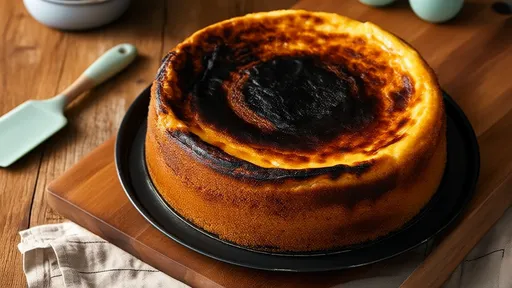
The Basque burnt cheesecake, with its signature charred top and creamy interior, has taken the culinary world by storm. Unlike traditional cheesecakes that strive for a flawless appearance, this rustic dessert embraces imperfection, turning what might be considered a baking mishap into a celebrated feature. The secret lies in the high-temperature baking method, which caramelizes the surface while keeping the center luxuriously soft. This technique, originating from the Basque region of Spain, has inspired bakers worldwide to experiment with controlled burning to achieve that perfect balance of bitterness and sweetness.
The Science Behind the Burn
At 220°C (428°F), the sugars and proteins in the cheesecake undergo the Maillard reaction, a chemical process responsible for browning and flavor development in cooked foods. This reaction is what gives the Basque cheesecake its distinctive dark patches and complex taste profile. The high heat causes the surface to dry out quickly, forming a crust that traps moisture inside. As a result, the interior remains almost custard-like, creating a striking contrast with the crispy, caramelized exterior. Timing is crucial; leaving the cake in the oven for even a few minutes too long can tip the balance from beautifully burnt to unpleasantly bitter.
Cultural Roots and Modern Adaptations
The story of this dessert begins at La Viña, a small bar in San Sebastián, where the cheesecake was first served with its intentionally scorched top. What started as a local specialty quickly gained international fame, with food enthusiasts and professional chefs alike attempting to replicate its unique texture and flavor. While the original recipe remains closely guarded, the basic principles—high heat, simple ingredients, and a willingness to embrace the burn—have been widely adopted. Some contemporary versions incorporate subtle twists, such as infusing the batter with vanilla, citrus zest, or even spices like cardamom, but the essence of the dessert always stays true to its Basque origins.
Mastering the Technique
Achieving the perfect burn requires more than just cranking up the oven. The batter, typically made with cream cheese, eggs, sugar, and heavy cream, must be smooth and free of lumps to ensure even cooking. Pouring it into a parchment-lined pan allows the edges to crumple naturally, contributing to the cake's artfully uneven appearance. Positioning the cake in the middle of the oven ensures consistent heat distribution, while rotating it halfway through baking helps prevent overly dark spots. The cake should jiggle slightly when removed from the oven, as residual heat will continue to cook it as it cools. This delicate dance between heat and timing is what separates a mediocre attempt from a showstopping dessert.
The Allure of Imperfection
In a world where Instagram-perfect desserts dominate social media feeds, the Basque burnt cheesecake stands out precisely because of its flaws. Each crack and darkened patch tells a story of transformation under intense heat, making every slice unique. This celebration of imperfection resonates with modern diners who value authenticity over polish. The cheesecake’s unpretentious appearance belies its sophisticated flavor profile, which combines the tanginess of cream cheese with the deep, toasty notes of caramelized sugar. It’s a dessert that invites you to look beyond the surface and appreciate the beauty in the burnt.
Serving and Pairing Suggestions
Traditionally served at room temperature, the Basque cheesecake can be enjoyed on its own or with a drizzle of fruit compote or a dusting of powdered sugar. Its rich, creamy texture pairs wonderfully with a glass of sweet sherry or a robust espresso, the bitterness of the coffee complementing the burnt notes of the cake. For a more adventurous pairing, try it with a tart berry sorbet or a sprinkle of flaky sea salt to heighten the contrast between sweet and savory. However you choose to serve it, the cheesecake’s bold flavors and striking appearance are sure to leave a lasting impression.
A Global Phenomenon
From its humble beginnings in a Basque tavern to its current status as a global dessert icon, the burnt cheesecake’s journey is a testament to the power of simplicity and boldness. It challenges conventional baking norms, proving that sometimes, the most memorable flavors come from embracing the unexpected. Whether you’re a seasoned baker or a curious novice, mastering this dessert offers a delicious lesson in the art of controlled chaos—one charred, creamy bite at a time.
By /Jun 18, 2025
By /Jun 18, 2025
By /Jun 18, 2025
By /Jun 18, 2025
By /Jun 18, 2025
By /Jun 18, 2025
By /Jun 18, 2025
By /Jun 18, 2025
By /Jun 18, 2025
By /Jun 18, 2025
By /Jun 18, 2025
By /Jun 18, 2025
By /Jun 18, 2025
By /Jun 18, 2025
By /Jun 18, 2025
By /Jun 18, 2025
By /Jun 18, 2025
