The delicate art of crafting perfect palmiers, those crisp, caramelized butterfly-shaped pastries, hinges on two seemingly simple yet profoundly technical elements: the precise layering of dough through meticulous lamination and the strategic distribution of sugar crystals. While home bakers often focus on visible aspects like shape or baking time, professionals know that the true magic lies in understanding how these two factors interact to create that iconic flaky texture with glass-like sugar shards.
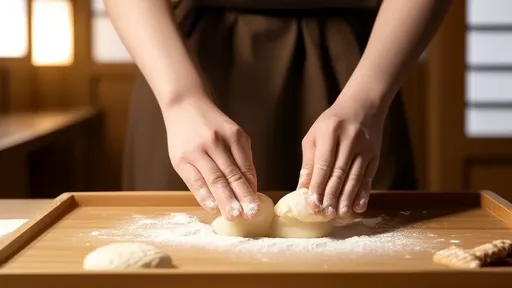
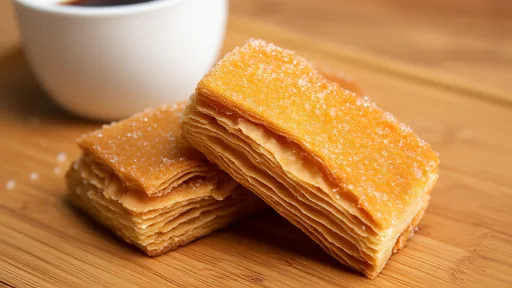
Lamination – the process of folding and rolling butter into dough – isn't just about creating layers; it's about engineering edible architecture. Each fold (or "turn" in pastry parlance) doesn't merely add quantity of layers but qualitatively changes how steam expands during baking. The relationship between fold count and layer thickness follows a geometric progression that would make mathematicians pause – with each turn potentially doubling the layers while halving their individual thickness. This creates the physical foundation for what French bakers call "feuilletage," that ethereal separation of strata that shatters at the slightest pressure from teeth or fingers.
What most recipes fail to convey is how sugar interacts with this laminated matrix at a microscopic level. Coarse sugar granules act as both sweetener and structural element, their crystalline edges creating micro-perforations in the dough during final rolling. These tiny punctures become steam vents during baking, preventing the layers from sealing together while allowing controlled expansion. The distribution pattern – whether sprinkled in even showers or concentrated along fold lines – directly influences how the pastry will bloom in the oven. Uneven application leads to asymmetrical "wings" on the finished palmier, while perfect distribution creates that textbook butterfly silhouette.
The timing of sugar incorporation reveals another layer of complexity. Adding sugar during lamination (rather than just before baking) allows the crystals to partially dissolve during resting periods, creating localized syrupy pockets that caramelize differently than dry sugar. This technique, favored by Parisian pâtissiers, yields alternating strata of clear caramel and crystalline crunch within a single pastry. The moisture drawn out by the sugar also affects gluten development, subtly altering the dough's elasticity – a fact evident when comparing the snap of a professional palmier to the tougher chew of amateur versions.
Seasoned bakers develop an almost musical rhythm to their lamination process, sensing dough elasticity through resistance against the rolling pin. The ideal palmier dough should have what's described as "memory" – enough elasticity to resist over-spreading during baking, yet sufficient plasticity to hold sharp edges when shaped. This texture emerges not just from ingredient ratios, but from how the gluten network aligns during those critical folds. Under-laminated dough bakes into dense, bready layers; overworked dough becomes tough as the gluten overdevelops. The sweet spot often lies in precisely four folds (creating 81 layers) for all-purpose flour, or three folds (27 layers) when using higher-protein bread flour to account for its stronger gluten.
Modern pastry labs have used thermal imaging to reveal how sugar distribution affects heat conduction. Areas with heavier sugar coverage brown faster due to sugar's thermal conductivity being nearly double that of plain dough. This explains why traditional spiral-shaped palmiers develop gradient coloring – the tightly wound center, having more overlapping sugar layers, caramelizes deeper than the outer edges. Some avant-garde bakers now use this principle to create intentional color patterns by varying sugar density across the dough sheet before rolling.
The resting period between folds, often treated as mere downtime, actually serves as a crucial phase for moisture equalization. As the dough chills, butter firms up while sugar slowly pulls moisture from surrounding layers. This gradual hydration allows for cleaner shearing between layers during subsequent rolling – a key reason why rushed lamination results in butter breakthrough and layer collapse. The sugar's hygroscopic nature also means ambient humidity dramatically affects working time; on rainy days, veteran bakers reduce resting periods to prevent excessive moisture absorption that could make the dough gummy.
Perhaps most surprisingly, the type of sugar used influences layer separation more dramatically than most assume. Standard granulated sugar's medium crystals provide balanced moisture absorption, while superfine sugar can make dough too wet as it dissolves rapidly. Coarse sanding sugar, while creating beautiful sparkle, requires adjusted baking times as its larger crystals take longer to melt. The real game-changer comes from mixing sugars – combining powdered sugar with granulated creates varied caramelization points that yield both crispness and melt-in-the-mouth tenderness simultaneously.
In professional kitchens, the final test of perfect lamination comes not during baking but in the raw dough's appearance. When sliced, the cross-section should reveal distinct, parallel lines with no butter smearing – what French pastry chefs call "feuille morte" (dead leaf) for its resemblance to autumn leaf veins. The sugar's presence should be visible as faint crystalline deposits along these layers, not as surface decoration. This hidden structure explains why mediocre palmiers might look impressive straight from the oven, only to deflate into leathery disappointments as they cool, while properly laminated specimens maintain their airy architecture indefinitely.
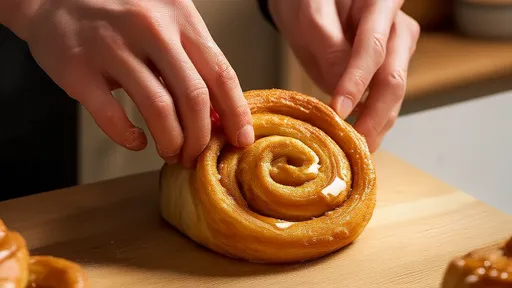
The marriage of sugar and lamination transforms humble ingredients into edible geometry. Each bite of a well-executed palmier offers a gustatory lesson in physics and chemistry – from the glass transition of caramelizing sugars to the steam mechanics that lift layers apart. What appears as simple pastry craftsmanship reveals itself upon closer examination as a precisely calibrated edible mechanism, where every fold and sugar grain conspires to create that singular moment of shattering sweetness.
By /Jun 18, 2025
By /Jun 18, 2025
By /Jun 18, 2025
By /Jun 18, 2025
By /Jun 18, 2025
By /Jun 18, 2025
By /Jun 18, 2025
By /Jun 18, 2025
By /Jun 18, 2025
By /Jun 18, 2025
By /Jun 18, 2025
By /Jun 18, 2025
By /Jun 18, 2025
By /Jun 18, 2025
By /Jun 18, 2025
By /Jun 18, 2025
By /Jun 18, 2025
